

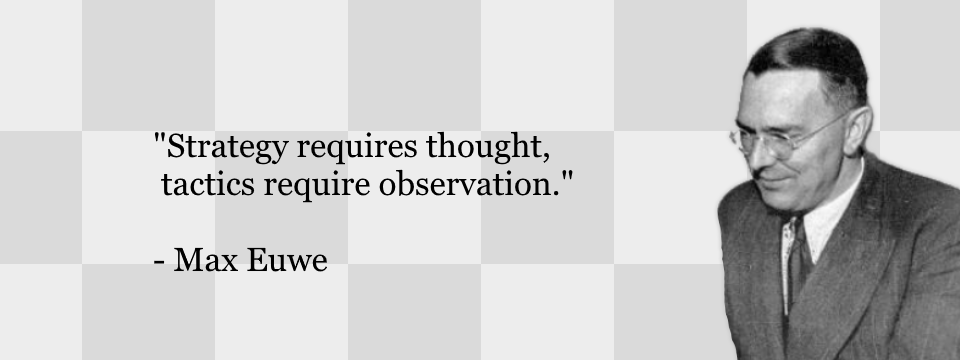
Why the distinction matters for Omnichannel Retail in the AI era.
Launching an AI shopping assistant is not, by itself, a strategy. Neither is introducing personalized recommendations, automating campaigns, or opening another sales channel.
These are initiatives, their strategic value depends on the choices they serve.
From my perspective, the leadership challenge in omnichannel retail is not simply to accelerate execution, it is to ensure that we are executing the right choices.
Strategy defines “How we intend to win”.
Strategy is more than an ambition such as “grow revenue” or “become customer-centric”, it defines where we will compete, whom we will serve, how we will differentiate, and what we will deliberately choose not to do. Tactics are the specific actions that put those choices into practice.
The distinction is not simply long-term versus short-term, or thinking versus doing, and both require judgement, both involve decisions.
The difference is their purpose:
- Strategy establishes the logic for creating value.
- Tactics translate that logic into concrete action.
For a retailer, “increase online sales” is an objective. “Deploy AI recommendations” is a tactic.
A strategy would explain which customers we intend to win, why they should choose us, and how our capabilities will make that preference commercially sustainable.
One technology, different strategic choices.
Consider two hypothetical retailers introducing AI-enabled product recommendations.
The first competes on convenience: its strategic choice is to help time-pressed customers complete everyday purchases with minimal effort.
The second competes on expertise and discovery: its strategic choice is to help customers make confident, considered purchases through distinctive advice.
Both might use similar technology, but their tactics should be different.
The technology does not define the strategy. The customer promise determines how the technology should be used.
Omnichannel Is not a list of channels.
For me, an omnichannel strategy begins with deciding how physical and digital touchpoints will work together to deliver that promise.
“Launch an app,” “introduce click-and-collect,” and “connect the CRM” describe actions, they do not yet explain why those investments belong together.
The strategic questions come first:
- What customer problem are we solving?
- Where does each channel create distinctive value?
- What experience must remain consistent across touchpoints?
- Which capabilities deserve investment and which do not?
- What trade-offs are we prepared to make?
Only then would I select the tactics.
For a premium retailer, for example, I might prioritize appointment booking, associate access to product information, and continuity between online enquiries and in-store consultations.
For a convenience-led business, I might instead prioritize stock visibility, straightforward substitution, and dependable collection.
Neither approach is inherently superior and the test is whether the actions reinforce a coherent competitive position.
AI makes the distinction more important.
AI can support tactical execution by handling repetitive, data-heavy work, including activities such as lead scoring, and that makes it a useful execution capability, not a substitute for choosing the business direction it should serve.
My concern is that the availability of new tools can encourage leaders to start with solutions:
“We need a chatbot.”
“We need more personalization.”
“We need to automate.”
I would reverse the conversation:
“What matters most to our customers?”
“What prevents us from delivering it?”
“Where would AI make a meaningful difference?”
An AI initiative should earn its place through its contribution to the strategy, not through its novelty.
Adapt the Tactics without losing the direction.
Tactics should evolve as evidence emerges. A campaign can change, a recommendation model can be adjusted, or an experiment can be stopped without necessarily abandoning the strategy behind it.
Suppose a retailer chooses to differentiate through trusted advice: if an automated recommendation tool produces poor results, the response should not automatically be to abandon that positioning.
I would first examine the execution: product information, recommendation quality, integration with store teams, and the customer’s ability to reach a knowledgeable person.
At the same time, strategy should not become untouchable. If the underlying customer need or competitive assumptions prove wrong, leaders must be willing to revisit the choices themselves.
The discipline is to distinguish an execution problem from a strategic one.
A Leadership test before the next initiative.
Before approving an omnichannel or AI investment, I would ask 5 questions:
- Which strategic choice does this support?
- What customer or business outcome should change?
- What will we stop or deprioritize to make room for it?
- Who is accountable for the outcome, not just the launch?
- What evidence would justify scaling, adapting, or stopping it?
These questions connect ambition to action without confusing the two.
The difference that matters.
Strategy without tactics remains an intention.
Tactics without strategy risk becoming disconnected activity.
Strategic direction gives execution coherence and execution tests whether that direction works in practice.
In Omnichannel Retail, I believe Leadership is about maintaining that connection: a clear customer promise, deliberate investment choices, and the flexibility to improve how we deliver.
AI can accelerate the work. Strategy determines whether the work is worth doing.
